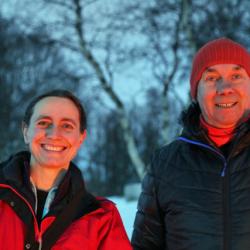
Serps' concentric rings of friendship extend in many directions, and the most recent splash is from Tromso, Norway, where thanks to Laure Latham, she shared a story which resonates well.
Dear swimmers, while in Norway, I read Robert Fisher’s postcard from the Alps and thought I’d send one from Norway.
I remember how Rod Newing kindly connected me with Norwegian swimmers at the Chill Swim Windermere last month. This was to plan a swim during our half-term trip to Tromso with my family. Well, we met for a wonderful swim in the sea which led, rather unexpectedly, to an old polar mystery from 1928.
When I introduced myself in Windermere to Egil Lauritz Pettersen, a Norwegian journalist whose wife swam at the Chill Swim, I gave him my email address. He noticed my surname, Latham, and immediately asked if my name had anything to do with a polar expedition and Italy. I wasn’t sure about Italy, but I’d heard family stories about a seaplane built by my family’s aviation company to rescue explorers at the North Pole. Of course, he referred specifically to the seaplane in which Roald Amundsen disappeared. It was the ‘Latham 47’ seaplane, I said. We were both floored about the coincidence and he said that I should definitely plan to visit the Polar Museum in Tromso, where they had an exhibit about the expedition. Link here.
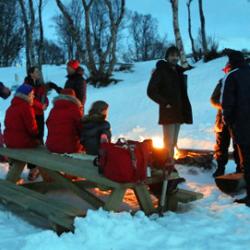
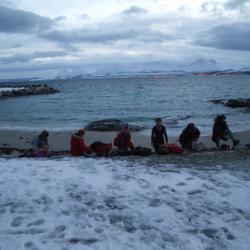
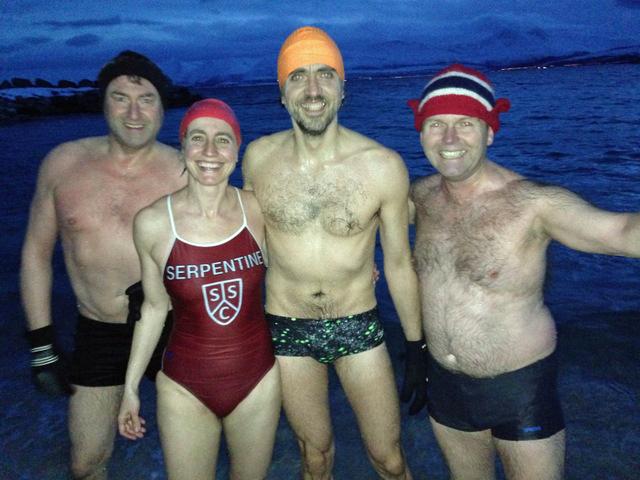
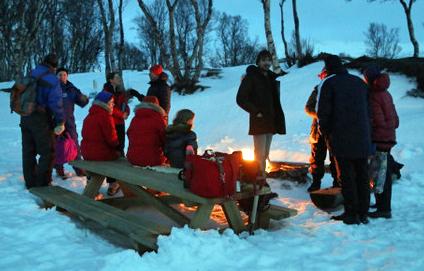
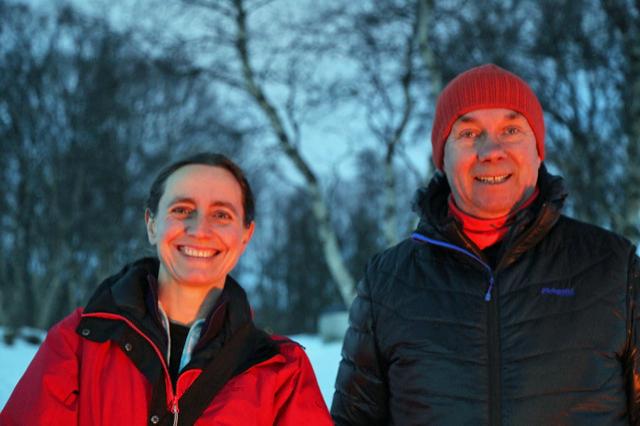
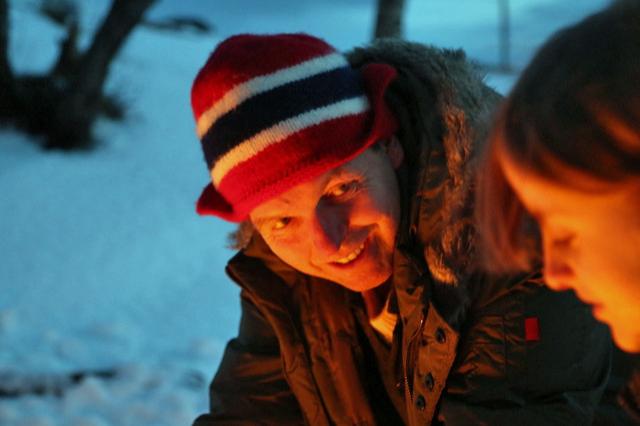
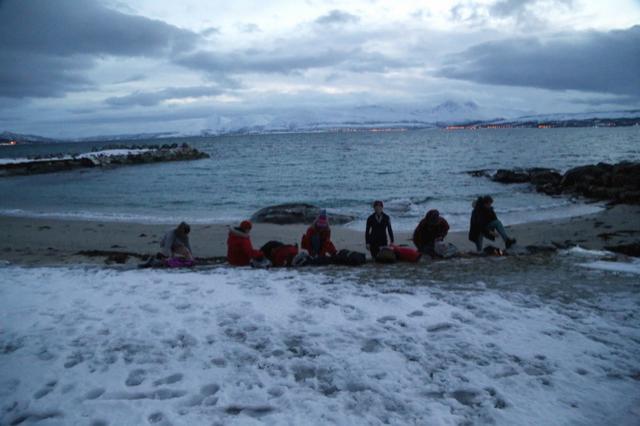
I decided to dig into my father’s family archives before the trip and found a few documents dating from the 1920s and the 1970s. Fast forward to Tromso. My family and I were picked up at our hotel by a swimmer friend of Egil, Terje Bernsten. We parked by the only beach in Tromso, crossed a snowy wood and arrived at the beach where our new friends had already lit a bonfire. What a wonderful surprise. I was thrilled to find familiar faces from Windermere and we had a quick chat around the fire before heading to the seawall to get changed. While the beach of Tromso doesn’t have a changing room with hot tea, it has spectacular views and a picnic area for bonfires. There was snow on the sand but the outside temperature was quite 'warm' considering we were in the Arctic Circle. The air temperature was probably 2 or 3C and the water temperature about the same.
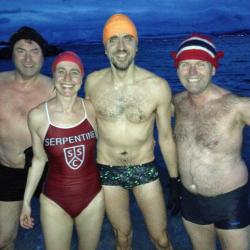
At 5pm on the dot, the sky was a dark shade of blue when we entered the water. “Watch your feet,” Terje warned, “there are sea urchins in the water.” I immediately lifted up my legs. We bobbed in the waves for a bit, watching the bonfire’s flames and the snowy coastline. After a few minutes, we dashed back to our clothes. As it happens, the same group of people meets every Friday in the winter to swim in the sea at 5pm sharp. Not 4.55, not 5.05 - 5pm. Two weeks before our trip, they were still swimming in the dark – courtesy of the three-month polar night. As Terje jokingly explained, they swim through the winter in order to appreciate the sea in the summer. If they didn’t, they might find it chilly in June. Apparently, summer water temperatures go up to the mid teens but not beyond. In keeping with Serpentine traditions, I had brought a flask of hot tea to share and our friends had brought warm berry juice for our girls. Really nice. We could have stayed there all evening but dinnertime was fast approaching and we made our way back. The swim was done and thoroughly enjoyed by all.
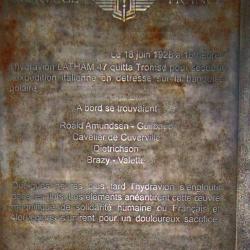
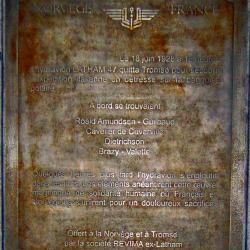
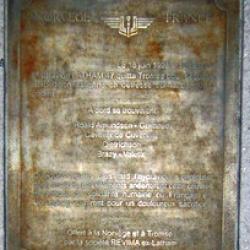
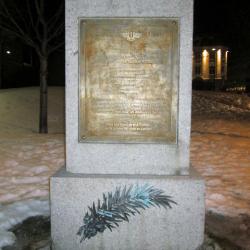
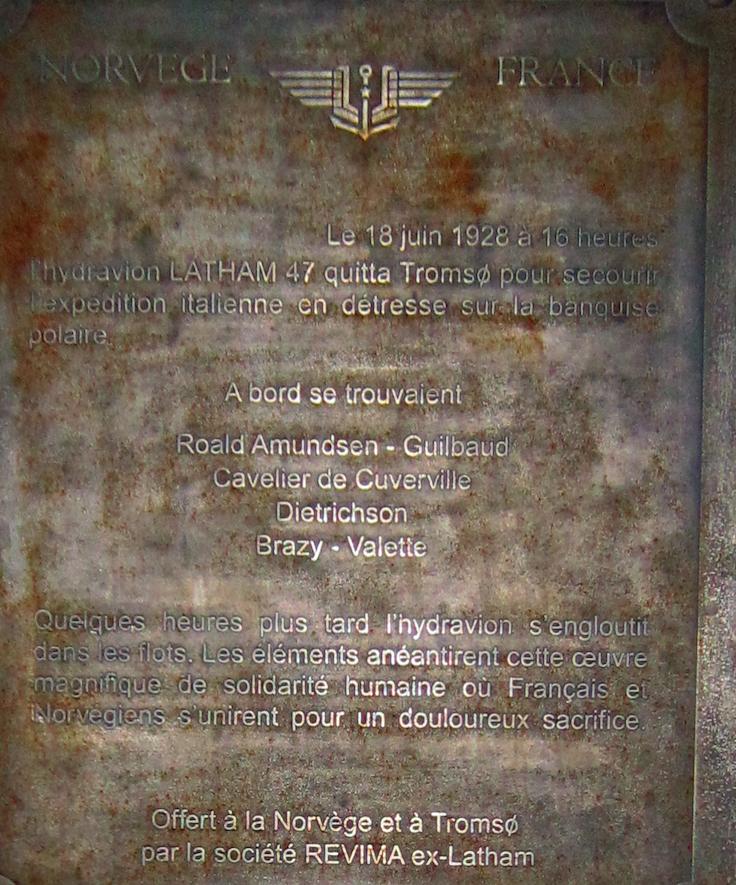
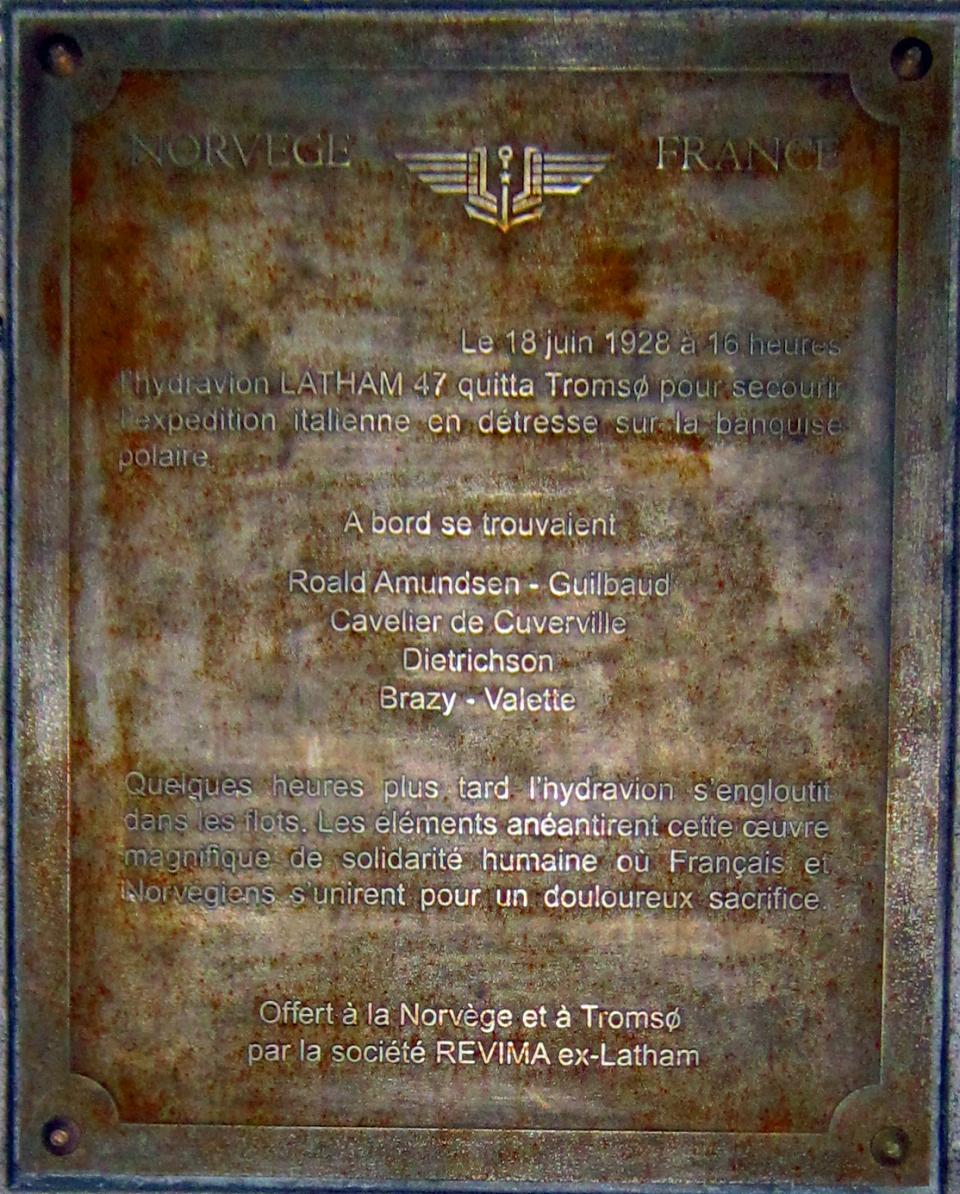
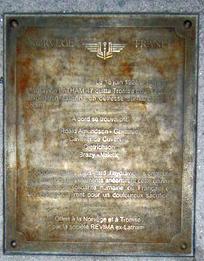
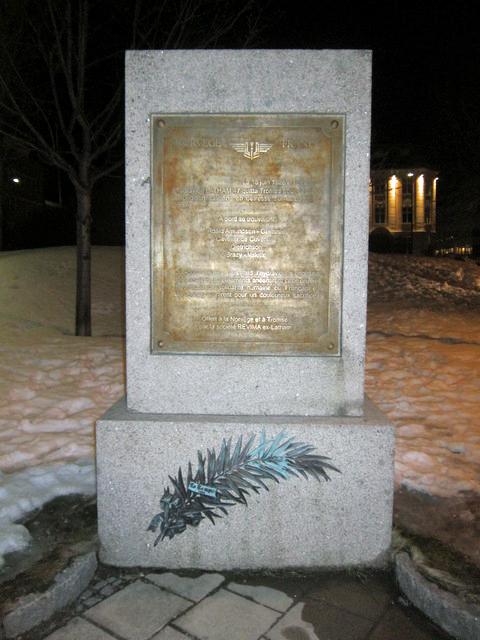
Let the polar exploration mystery begin. Driving us back to our hotel, Terje stopped to show us two memorials for the 1928 tragedy. The first one listed all the people whose lives were lost in June 1928 when Italian polar explorer Nobile’s zeppelin crashed at the North Pole. The second memorial honoured the lost crew of the Latham 47 seaplane.
The following day, I met with Lena Aakerol, the director of the Polar Museum and two local journalists. I spent some time poring over French documents which I had brought from my family’s archives, as well as discussing the tragedy. The truth is, nobody knows what happened. One fact is certain, Roald Amundsen and the plane’s crew were last seen when they took off on the Latham 47 seaplane from Tromso. Link here They disappeared at sea less than four hours later. No bodies were ever found. Only one of the plane’s floaters and two fuel tanks were later recovered.
It is widely assumed that the seaplane disappeared in bad weather and stormy seas around the Bear Island Svalbard archipelago. However, many mysteries still remain around the circumstances of the tragedy. What was the actual weather at sea that day? Why was no search party launched until 48 hours after the last radio message? Was the accident due to mechanical failure, human error or simply bad luck? Did any of the crew survive the crash? The more I learned about the last days of these men, the more tragic the whole story felt.
The museum director then showed me their exhibit on the Latham 47 expedition, as well as models of the seaplane and Nobile’s zeppelin. Our encounter appeared in the Tromso press today (in Norwegian, of course). This is how in my quest to swim the chilly waters of Tromso, link here I discovered a long-forgotten chapter of polar exploration.
Who knows where the next swim will take me? Ah yes, I know; a cup of tea in the Serpentine’s changing room.
Kind regards,
Laure Latham
[John Tierney]
@swimmingdragons